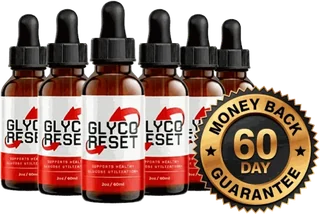
Chromium on the label
Chromium Picolinate at 0.7 mcg: What Is in a Glyco Reset Dropper?
Chromium picolinate is the one nutrient with its own amount on the Glyco Reset label: 0.7 mcg, printed as 2% of the Daily Value. NIH lists an Adequate Intake of 20 to 35 mcg a day, and the diabetes trials it describes used 1,000 mcg. No trial tested this bottle.
Written by the Glyco Reset label deskUpdated
The number01
How much chromium is 0.7 mcg?
Chromium 0.7 mcg is a very small amount: the label prints it as 2% of the Daily Value, and 0.7 divided by the 35 mcg Daily Value gives exactly that.
A microgram is a thousandth of a milligram. The 0.7 mcg sits on its own line, apart from the 200 mg proprietary blend, so it is the only nutrient on the front panel with a stated amount (NIH ODS, Chromium fact sheet for professionals).
NIH lists an Adequate Intake of 20 to 35 mcg a day, depending on age and sex. Set the label beside those figures and the picture is plain.
| Group (NIH) | Adequate Intake | 0.7 mcg is about |
|---|---|---|
| Men 19 to 50 | 35 mcg | 2.0% |
| Men 51 and over | 30 mcg | 2.3% |
| Women 19 to 50 | 25 mcg | 2.8% |
| Women 51 and over | 20 mcg | 3.5% |
None of this says a person needs more. NIH reports that chromium deficiency has not been seen in healthy people, so a low percentage is not a gap to fill.
The form02
What does "as chromium picolinate" mean on a label?
Chromium picolinate is chromium bound to picolinic acid, and the words "as chromium picolinate" tell you which compound supplies the mineral.
NIH notes that only part of the compound is chromium itself, about 12.4% by weight, and that labels list the elemental amount. So the 0.7 mcg is read as chromium, not as the weight of the whole compound (NIH ODS, Chromium fact sheet for professionals).
We found no source that compares picolinate with other chromium forms in a liquid. We also found no source on whether a liquid changes how much the body takes in, so we make no such claim.
- The form is named on the label: chromium picolinate.
- The amount is named: 0.7 mcg, 2% DV.
- The dropper volume is not printed in what we have, so the amount per dropper rests on the label line alone.
The research03
What did chromium picolinate studies actually use?
The best-known chromium picolinate trial used 1,000 mcg a day, about 1,400 times the 0.7 mcg on this label.
NIH describes a 1997 trial in 180 adults with type 2 diabetes. It reported lower fasting glucose and A1C at that dose. NIH adds that later studies were inconsistent, and that a 2019 review of 58 trials found a slight change of unclear clinical meaning (NIH ODS, Chromium fact sheet for professionals).
A 2007 review of 41 trials found a small A1C change in people with type 2 diabetes and no benefit in people without it. Almost half the trials were poor quality, and the larger effects came from the weaker ones (Balk 2007, Chromium and glucose metabolism (review)).
No trial tested Glyco Reset, and a result at 1,000 mcg cannot be assumed to apply to a bottle with 0.7 mcg. The bars below put the same two numbers side by side.
The comparison. NIH recounts a 1997 trial giving adults with type 2 diabetes 1,000 mcg of chromium picolinate daily. The Adequate Intake, by contrast, is 20 to 35 mcg. (NIH ODS, Chromium fact sheet for professionals)
Read it with care. The studied amount comes from a different product, group and time span. It is not a recommended or effective dose, and no trial tested Glyco Reset.
The comparison. LiverTox cites 400 mg three times daily as a typical gymnema supplement amount. The label's 200 mg has to stretch across twenty-one names. (LiverTox, Gymnema)
Read it with care. The studied amount comes from a different product, group and time span. It is not a recommended or effective dose, and no trial tested Glyco Reset.
The comparison. LiverTox reports liver injury cases at roughly 800 mg to 1.8 g of extract daily. The whole blend totals 200 mg. (LiverTox, Green Tea)
Read it with care. The studied amount comes from a different product, group and time span. It is not a recommended or effective dose, and no trial tested Glyco Reset.
Each full bar is the daily amount used in the one study or reference we cite. The filled part is the most the label could give per dropper: the whole 200 mg blend is shared by 21 names, so any one plant is a fraction of that. The label also does not say whether each name is a powder or an extract, so even this comparison is rough.
The claim04
Is chromium picolinate good for insulin resistance?
Chromium picolinate has no firm answer for insulin resistance: FDA allows only a qualified claim and calls the link "highly uncertain".
NIH reports that FDA will accept that qualified wording and no stronger one (NIH ODS, Chromium fact sheet for professionals). NCCIH also describes chromium studies as small and inconsistent, with no clear conclusion (NCCIH, Diabetes and Dietary Supplements).
The brand's own wording on the front is "healthy glucose utilization", with an asterisk. We found no study of this product that tests it.
Safety05
Who should ask a pharmacist about chromium first?
Anyone who takes insulin or another diabetes medicine should show the label to a pharmacist before the first dropper, because NIH says chromium could add to the effect of insulin.
NIH says metformin and similar medicines may be additive, and it lists case reports of low blood sugar, liver and kidney problems. A small study found chromium reduced absorption of levothyroxine (NIH ODS, Chromium fact sheet for professionals). Those reports involve other products and amounts, not this bottle.
Only blood tests diagnose diabetes or prediabetes (NIDDK, Diabetes Tests & Diagnosis). Keep taking prescribed medicine, and tell your doctor and pharmacist about every supplement (MedlinePlus, Metformin). Severe low blood sugar, fainting or a seizure is an emergency: call 911 (Mayo Clinic, Hypoglycemia).
Claims check06
Which chromium claims does the evidence back?
The evidence backs the amount printed on the label and little else about chromium on this bottle.
The table lists what a reader can verify and what stays open.
| Question | Answer from what we have |
|---|---|
| Amount per dropper | 0.7 mcg, 2% DV |
| Form | Chromium picolinate |
| Studied amount in diabetes trials | 1,000 mcg a day (NIH) |
| Trial of this bottle | None found |
| Effect at 0.7 mcg | No source |
Next step07
Where does chromium fit in the rest of the label?
Chromium is one line; the other twenty-one names share a separate 200 mg total with no split printed.
To judge the bottle, read the chromium line here, then the blend. The proprietary blend page explains why no single blend ingredient can be matched to a studied amount, and the ingredients page walks through every name in printed order.
If the label still looks fine after that, check current pack prices and the guarantee terms at checkout. The bottle that arrives is the final word on the numbers.

FAQ08
Chromium in Glyco Reset: questions people ask
How much chromium is in Glyco Reset?
The label as given lists chromium (as chromium picolinate) at 0.7 mcg, printed as 2% of the Daily Value. That is one amount for the chromium line only. The twenty-one blend names share a separate 200 mg total with no split.
Is 0.7 mcg of chromium enough?
We cannot say what is enough for any person. NIH lists an Adequate Intake of 20 to 35 mcg, and 0.7 mcg is a small share of that. NIH also reports that deficiency has not been seen in healthy people.
What is the difference between chromium and chromium picolinate?
Chromium is the mineral. Chromium picolinate is the mineral bound to picolinic acid. NIH says about 12.4% of the compound is chromium and that labels list the chromium amount, so 0.7 mcg refers to the mineral.
Does chromium picolinate work for blood sugar?
Studies disagree. A 1997 trial at 1,000 mcg a day reported lower glucose, but later work was inconsistent and FDA calls the link to type 2 diabetes highly uncertain. No trial tested this bottle at 0.7 mcg.
Can chromium cause low blood sugar with insulin?
NIH says chromium could increase the risk of low blood sugar with insulin, and may be additive with metformin. Ask your pharmacist before the first dropper and keep taking prescribed medicine.
Why do the diabetes trials use 1,000 mcg?
NIH describes the 1997 trial as using 1,000 mcg a day, far above intake levels. Researchers chose a pharmacologic dose, not a nutrition dose. That amount is about 1,400 times the label's 0.7 mcg.
Does chromium interact with thyroid medicine?
NIH reports a small study in which chromium reduced absorption of levothyroxine. If you take thyroid medicine, ask your pharmacist whether to space doses and mention every supplement to your doctor.
Who wrote this09
Written and reviewed by
Pages built from the bottle label and linked NIH, CDC, FDA, FTC and peer-reviewed sources.
Last updated . Read our editorial standards and how we check reviews. This website is the information site of a U.S. retail partner for Glyco Reset. It is not the manufacturer, and it is not the brand's sales page. We earn money when you buy through our order links.
Keep reading
More about Glyco Reset
U.S. retail partner
Ready to try Glyco Reset?
Read the panel on your bottle, check with your pharmacist if you take any medicine, then pick a pack. Every pack carries the brand's money-back guarantee; confirm the terms at checkout.
- Order on the brand's order desk
- Money-back guarantee (confirm terms)
- Shipping shown at checkout